
Built to Your Requirements. Engineered to Perform
Custom Robotics Development & System Engineering
Custom robots engineered around real operational workflows. Through custom robotics development, robotic system design and full-stack robotics engineering services, we deliver scalable automation systems that fit your environment, integrate with existing infrastructure and achieve measurable performance targets — from concept and prototyping to deployment, training and long-term support.
Robots Designed to Your Specifications
Built to Fit Your Workflow — Not a Generic Platform
Every company works differently, and robotics only delivers real ROI when the system matches how work actually happens. A factory has line constraints, safety zones and cycle-time pressure. A hospital has corridor rules, patient safety protocols and unpredictable traffic. A farm deals with terrain, weather and crop variability. A warehouse depends on routing logic, picking flows and daily volume swings. That’s why standard robots often disappoint after the demo: they are designed to be “general,” not engineered to perform reliably in your exact environment.
At TheRobots.space we design and build robotic systems tailored to your process, site conditions and operational targets. Instead of forcing your team to adapt to a machine, we engineer the machine around your real workflow—so automation becomes predictable, repeatable and scalable. We start with your task, constraints and performance expectations, then translate them into engineering specifications, system architecture and a clear deployment plan. The result is not “a robot,” but a working system aligned to your throughput goals, safety requirements and integration needs.
You get end-to-end delivery from one accountable team: concept and feasibility, engineering design, hardware manufacturing, software development, integration, testing, training and long-term support. That means fewer surprises, faster adoption on-site and a solution that keeps improving after deployment through updates and optimization. If you’re evaluating automation but don’t want a catalog product that forces compromises, we’re built for that exact problem.

What a Custom Robot Means for Your Business
Engineered Automation Aligned With Your Workflow, KPIs and Operational Constraints
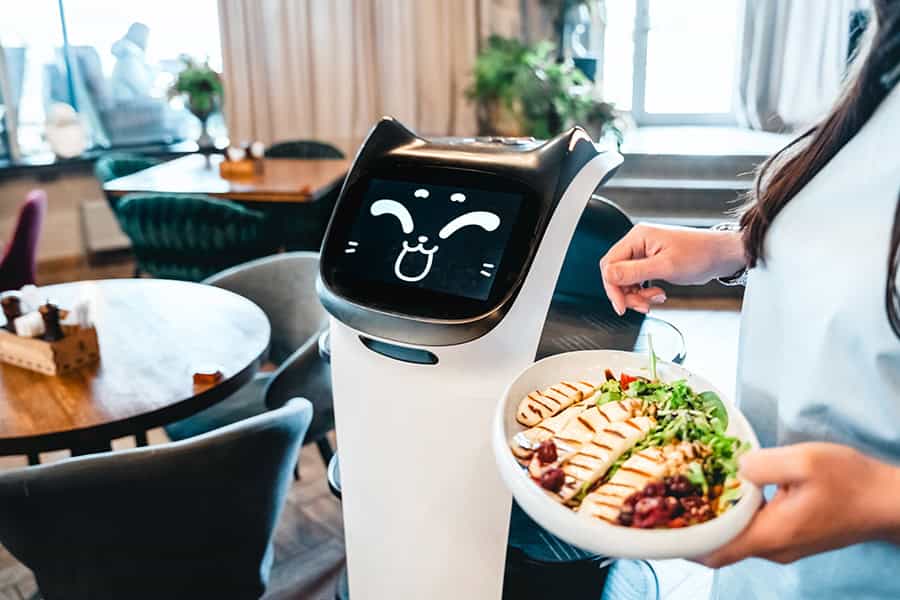
A “custom robot” isn’t a unit from a catalog with a few add-ons. It’s a designed-to-requirements automation system engineered after we analyze a real operational task: where it runs, what it must do every day, what safety and access rules apply, what it must integrate with, and what performance targets it must consistently hit. In business terms, you’re not buying hardware — you’re buying predictable output.
What you get is clarity and control before you spend money on the wrong platform:
- Task analysis + feasibility (technical + economic viability)
- Specifications + system architecture (what it does, how it works, what it needs)
- Risk & safety boundaries (how it operates safely in real conditions)
- Integration plan (systems, workflows, data, handoff points)
- Acceptance criteria (how success is measured and validated)
Here’s how that translates into results across industries:
- Solar parks: inspection robots shaped around site geometry and routes → faster coverage, earlier fault detection, less manual patrol time
- Hospitals: delivery robots tuned to corridor rules and safety protocols → reduced staff workload, traceable logistics, reliable navigation in live environments
- Factories: automated machines integrated with production-line logic → stable cycle times, fewer errors, cleaner handoffs between stations
- Farms: platforms adapted to crops and terrain → consistent field operations, fewer interruptions, better operational control over seasons
We don’t start with equipment and try to “place” it. We start with the operational problem — then engineer the robotic system that solves it.
Complete Robotics Development Framework From Feasibility to Industrial Deployment
Every custom robotics project follows a structured engineering path designed to reduce risk, control investment and ensure measurable performance. From feasibility analysis and concept design to hardware development, software architecture, integration, training and lifecycle support, each phase is executed with clear technical milestones and defined outcomes. This framework ensures that every robotic system we deliver is engineered for reliability, integration readiness and long-term operational stability — not just initial deployment.

Consultation & Feasibility Study
Operational Validation Before Investment
Every custom robotics project starts with understanding the real operational context. Before design or hardware decisions are made, we conduct a structured assessment to determine whether automation is technically achievable and economically justified. This phase reduces investment risk, clarifies expectations and ensures that any proposed robotic system aligns with performance targets, safety standards and long-term operational objectives.
What We Analyze During the Feasibility Phase
- Working environment (layout constraints, environmental conditions, interaction zones)
- Required tasks (precision, repeatability, complexity level)
- Operating schedule (duty cycles, peak loads, uptime expectations)
- Safety requirements (compliance standards, human-robot interaction boundaries)
- Expected productivity (throughput targets, cycle time improvements, ROI assumptions)
At the end of this phase, you receive a clear answer: whether robotics is technically viable, economically justified and strategically aligned with your operational objectives.
Concept Design
From Operational Requirements to Technical Architecture
Once feasibility is confirmed, the project moves into structured concept design. This is the stage where operational requirements are translated into a clear engineering framework. We define how the robotic system will function, how components interact, what control logic governs behavior and how performance objectives will be achieved. The goal is to eliminate ambiguity before hardware is built and to provide full transparency on system logic, safety boundaries and integration flow.
What Is Developed During the Concept Phase
- Technical specifications defining system capabilities, limits and performance parameters
- Functional diagrams describing task flow, motion logic and interaction points
- System architecture outlining hardware, control and software layers
- Risk assessment identifying operational, safety and integration constraints
At the end of this phase, the client receives a structured explanation of how the robot will operate, how it will integrate into existing workflows and how success will be measured once deployed.


Mechanical & Hardware Engineering
Designing the Physical System for Real-World Performance
This is where the robotic system moves from concept to physical reality. We engineer the mechanical structure and hardware platform in our laboratory and together with industrial manufacturing partners, ensuring that every component is selected and dimensioned for durability, precision and operational stability. The objective is not only to build a machine, but to construct a platform capable of performing reliably under real working conditions, duty cycles and environmental constraints.
What Is Engineered at This Stage
- 3D CAD mechanical design defining structure, dimensions and assembly logic
- Structural calculations validating load capacity, stress limits and stability
- Component selection based on reliability, availability and maintenance strategy
- Actuator sizing aligned with torque, speed and duty cycle requirements
- Sensor placement optimized for precision, safety and system awareness
Depending on the application, the hardware configuration may include robotic arms, mobile platforms, tracks or wheels, task-specific grippers and tools, as well as safety enclosures designed for secure operation.
Hardware Technologies
Core Components That Define Performance and Reliability
Every custom robotic platform is built from a hardware stack selected specifically for the operational task, duty cycle and environment. Components are chosen based on precision, durability and long-term serviceability, ensuring stable performance in real working conditions.
Actuation Systems
- Servo motors for precise dynamic movement
- Stepper motors for controlled positioning
- Linear actuators for pushing and lifting
- Pneumatic systems for fast mechanical action
Sensing Technologies
- Vision cameras for inspection and environment awareness
- Laser scanners for distance measurement and navigation
- Proximity and force sensors for safe interaction
- Temperature sensors and GPS positioning where required
Control Electronics
- Embedded industrial computers for real-time processing
- Motor drivers for accurate motion control
- Safety circuits for compliance and protection
- Battery and power systems matched to autonomy requirements


Software Development
Control Logic, Autonomy and Operator Interaction
Hardware enables motion, but software defines behavior. We develop custom control software tailored to the specific operational task, ensuring predictable performance, safe interaction and measurable output.
Core Software Capabilities
- Motion control for coordinated and precise task execution
- Navigation systems for autonomous routing and spatial awareness
- Obstacle avoidance logic for safe operation in dynamic environments
- Object detection modules for task-specific interaction
- Data collection for performance tracking and reporting
- Remote monitoring for real-time system visibility
Artificial Intelligence Integration
When required, AI algorithms enhance perception and decision-making. These may include visual inspection systems, defect detection models, product identification algorithms and human detection mechanisms that increase operational safety in shared environments.
Artificial Intelligence Integration
We design intuitive operator interfaces adapted to non-technical users. These may include touchscreen control panels, mobile applications, remote dashboards and web-based monitoring platforms, allowing staff to supervise and operate the robotic system efficiently without advanced robotics expertise.
Integration & Implementation
From Engineering to Operational Deployment
Once development is complete, the robotic system is deployed directly at the client’s site and prepared for real operational use. This phase ensures that the solution performs as designed within the actual working environment, not just in controlled testing conditions.
Deployment Activities
- On-site installation and mechanical setup
- System calibration and configuration
- Performance testing under operational load
- Safety validation according to compliance requirements
Operational Integration
The robotic system is integrated with existing infrastructure and procedures to ensure seamless functionality. This may include connection to production lines, synchronization with warehouse systems, integration with building automation platforms or alignment with monitoring and reporting software.


Cloud Monitoring & Remote Support
Continuous Visibility and Proactive System Management
Custom robotic systems can be connected to a secure remote monitoring platform, enabling continuous oversight beyond physical deployment. This connectivity ensures that performance, system health and operational metrics remain visible at all times, reducing unexpected downtime and improving maintenance planning.
Remote Capabilities
- Performance tracking and operational analytics
- Maintenance alerts and preventive notifications
- Secure software updates and system improvements
- Remote diagnostics and technical support access
Operators and management teams can monitor robot status, review performance data and respond to alerts directly from a computer or mobile device, ensuring faster decision-making and sustained operational continuity.
Training & Personnel Education
Ensuring Confident and Safe System Operation
Technology delivers value only when teams can operate it effectively. We provide structured training programs designed to ensure that operators, supervisors and maintenance staff understand how the robotic system functions, how to manage daily routines and how to respond to operational scenarios with confidence.
Training Modules
- Operator training for routine use and task execution
- Maintenance instruction covering inspection and preventive care
- Safety procedures for compliant and secure operation
- System supervision guidelines for performance monitoring
After training, staff are fully prepared to operate, supervise and maintain the robotic system safely, ensuring smooth integration into daily workflows


Service & Maintenance
Lifecycle Support for Long-Term Operational Reliability
A robotic system must remain stable, efficient and serviceable long after deployment. We provide ongoing support throughout the entire lifecycle of the robot, ensuring sustained performance, minimized downtime and predictable operational costs.
Support Services
- Periodic maintenance and system inspections
- Spare parts supply and replacement planning
- Software updates and system improvements
- Performance optimization and tuning
- Repair assistance and technical intervention
Our laboratory and engineering partners ensure that each system remains reliable, maintainable and aligned with evolving operational requirements.
Collaboration & Production
From Prototype to Industrial-Scale Implementation
Delivering custom robotics at an industrial level requires more than isolated engineering. Our projects are supported by a coordinated network of specialists who contribute across design, manufacturing, electronics, software and system integration. This structure allows us to transition efficiently from concept validation and prototyping to scalable production and operational deployment.
Engineering and Production Network
- Design engineers responsible for mechanical and system architecture
- Manufacturing partners for precision fabrication and assembly
- Electronics specialists for control systems and hardware integration
- Software developers for autonomy, control logic and interfaces
- Integration technicians for on-site commissioning and validation
This collaborative model ensures that each robotic solution moves smoothly from prototype stage to industrial-grade implementation with consistency, scalability and quality control.

Start a Robotics Engineering Discussion
Every operational environment is different.
Factories, hospitals, logistics centers, solar parks and smart buildings require autonomous robotic systems engineered around real constraints, safety standards and performance targets.
Our robotics engineering team evaluates your operational workflow, technical requirements and integration complexity before defining a structured development strategy. From robotic system design and hardware architecture to AI robotics software and cloud robotics platform integration, we approach each project as an engineered solution — not a product sale.

Engineered Around Your Reality, Not Around a Product
Strategic Custom Robotics That Delivers Measurable Operational Impact
Custom robotics delivers more than automation. It delivers alignment between technology and the way your operation truly functions. When a robotic system is designed around your workflow, the result is not just movement or task execution — it is measurable improvement in stability, safety and productivity.
A custom-engineered system enables precise adaptation to your processes, increases operational efficiency, reduces human exposure to repetitive or hazardous tasks, provides continuous data visibility and creates a scalable automation foundation that grows with your business. Instead of adapting your operation to a generic machine, you receive a system engineered specifically for your objectives.
Our Philosophy
We do not begin with hardware and search for a place to deploy it. We begin with a real operational challenge and design the appropriate robotic system to solve it. Every project is different because every workflow, constraint and performance target is different. That is why every solution we build is engineered accordingly — with defined objectives, measurable outcomes and long-term viability in mind.
From Concept to Working Machine
We guide each client through the complete journey: concept definition, system design, prototype validation, industrial production, on-site implementation and lifecycle support. The result is not a prototype left in a lab, but a fully operational robotic system integrated into daily processes and delivering sustained value.
Custom robotics is not about machines. It is about building technology that fits your work — precisely, predictably and sustainably.