
Industrial Robots. Engineered for Continuous Production.
Industrial Robotics & Manufacturing Automation
Industrial robots driving the next generation of intelligent manufacturing. Through integrated industrial automation systems, advanced robotic welding solutions, robotic palletizers and high-precision industrial robot arm platforms, we engineer scalable automation architectures that optimize production throughput, enhance process control and enable resilient, data-driven factory performance across modern manufacturing environments.
From architecture to execution
Engineering the framework that transforms industrial robotics into real production performance
Industrial robots create value only when architecture and execution operate as a unified production system. Without structural planning, synchronized control logic and operational validation, even advanced manufacturing robots remain isolated automation units that fail to deliver measurable gains.
We engineer the production framework that enables industrial automation to function under real manufacturing pressure — aligning cycle time, material flow, control environments and system dependencies before robotic welding cells, assembly platforms or palletizing systems enter execution. By structuring the logic behind motion, timing and interaction between machines, we ensure that automation strengthens throughput, stabilizes processes and supports long-term scalability rather than introducing complexity or variability into the production line.

System architecture and production mapping
We analyze manufacturing workflows, define robotic intervention points and model process dependencies before deployment begins. By aligning industrial robots with cycle time requirements, machine interaction and material transfer logic, we create a structured foundation where automation reinforces production stability instead of fragmenting it.

Control strategy and synchronized execution
Industrial robots are integrated within coordinated control environments connected to PLC systems and factory automation layers. Motion sequences, communication protocols and timing structures are engineered to maintain deterministic execution, ensuring repeatable throughput and consistent operational behavior across the entire production line.

Deployment engineering and operational resilience
Commissioning is treated as a structured engineering phase that defines startup logic, fault handling procedures and recovery sequences under real industrial conditions. This approach ensures that robotic systems maintain uptime, predictable performance and controlled interaction within high-demand manufacturing environments.

Validation, performance modeling and scalable growth
Through simulation, structured testing and measurable performance validation, we confirm repeatability, throughput targets and stress tolerance before scaling automation. This ensures that applications such as robotic welding, assembly integration or palletizing systems operate within a resilient framework capable of supporting future production expansion.

Industrial robots powering every critical layer of modern manufacturing
Industrial robots are no longer isolated machines positioned at the edge of production lines. Today, industrial automation is embedded directly into the core of robotics and manufacturing strategy, where performance, repeatability and throughput define competitive advantage. From fabrication and machining to automatic assembly line integration and robotic palletizer deployment, manufacturing robots operate as structured components of factory automation equipment designed for continuous industrial output.

Robotic welding systems
Robotic welding systems are a core component of industrial automation in fabrication-intensive production. A robotic welder integrated with an industrial robot arm enables consistent MIG, TIG and plasma welder operations with stable heat input and repeatable seam geometry.
In piping welding and structural applications, seam welder platforms strengthen robotics and manufacturing performance. Integrated within factory automation equipment, these industrial robots ensure repeatability and reduce process variability in high-volume production.
- Robotic welding cells
- Automated MIG, TIG and plasma welder systems
- Seam welder and piping welding automation
- Industrial robot arm welding integration
Pick and place automation
Pick and place automation systems support industrial robots operating in synchronized manufacturing environments. These manufacturing robots enable rapid component handling and automated machine feeding within structured industrial automation workflows.
Integrated as factory robots within automatic machinery, industrial robot arm platforms stabilize material flow and reduce idle time. They reinforce process robotics automation strategies by maintaining consistent cycle time across continuous production lines.
- Rapid component handling
- Automated machine feeding
- Industrial sorting automation
- Integration with automatic machinery
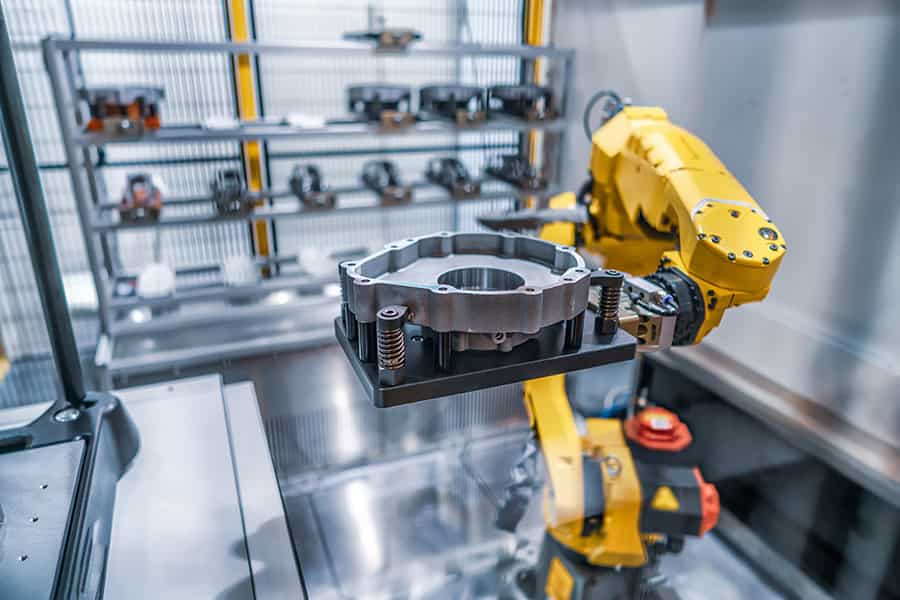

Palletizing and packaging robotics
Robotic palletizer systems operate at the end of industrial automation workflows where load stability and throughput consistency are critical. An industrial robot arm configured as a palletizer ensures standardized stacking patterns and controlled load formation.
Embedded within factory automation equipment, palletizer platforms improve material handling efficiency and reduce manual variability. These industrial robots align end-of-line packaging with broader robotics and manufacturing strategies
- Robotic palletizer systems
- Automated palletizer load formation
- Industrial packaging automation
- End-of-line material handling integration
Machine tending robots
Machine tending robots connect industrial robots directly to machining operations. Integrated with CNC platforms and automatic machinery, these manufacturing robots automate loading and unloading while maintaining stable cycle timing.
As factory robots within industrial automation systems, industrial robot arm platforms reduce downtime and support multi-shift production. They enhance robotics and manufacturing efficiency through structured process integration.
- CNC loading and unloading
- Integration with automatic machinery
- Metal component handling automation
- Continuous production support
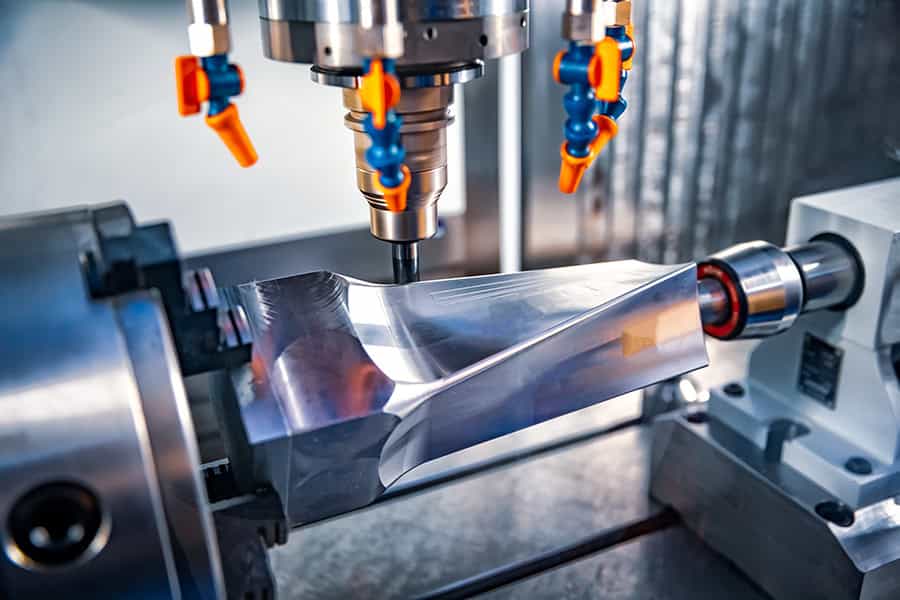

Assembly line robotics
Assembly line robotics represent a central application of industrial automation within synchronized production environments. Industrial robots deployed in an automatic assembly line coordinate fastening, positioning and multi-step sequencing with controlled precision.
Integrated into factory automation equipment, manufacturing robots improve repeatability and reduce assembly variability. Industrial robot arm systems strengthen robotics and manufacturing workflows through stable, coordinated execution.
- Automatic assembly line integration
- Torque-controlled robotic operations
- Industrial sensor integration
- Multi-station synchronization
Industrial painting and surface processing robots
Industrial painting robots extend industrial automation into finishing operations where coating uniformity and material control are essential. An industrial robot arm configured for automated painting ensures consistent application and repeatable surface coverage.
As part of factory robots infrastructure, these manufacturing robots support stable output quality. Integrated within process robotics automation systems, they reinforce consistent finishing performance across production cycles.
- Automated industrial painting systems
- Precision coating control
- Surface processing automation
- Integration with factory automation equipment

Performance impact
Industrial robotics engineered for measurable production performance
Industrial robots are deployed to change measurable production outcomes, not to introduce isolated automation layers. When industrial automation is structured correctly, performance gains appear across throughput stability, execution accuracy and operational continuity.
Within robotics and manufacturing environments, manufacturing robots become performance infrastructure — reinforcing cycle time discipline, reducing variability and strengthening factory automation efficiency under continuous industrial load.
Performance drivers

Production throughput discipline
Industrial robots operate within synchronized control environments that stabilize material flow and eliminate manual bottlenecks. By maintaining deterministic execution across automatic assembly lines and machine tending systems, throughput becomes predictable rather than reactive.

Execution consistency under load
Industrial robot arm platforms maintain repeatable motion profiles and calibrated task execution, ensuring consistent welding paths, assembly positioning and palletizer stacking patterns. This level of control reduces process drift and supports long-term manufacturing stability.

Reduced variability and rework
Robotic welders, palletizer systems and automated machinery operate within defined tolerances, limiting deviation across repetitive cycles. Industrial automation therefore strengthens quality consistency while lowering the cost associated with manual inconsistency.

Structured uptime and operational resilience
Factory robots integrated within coordinated control systems improve fault recovery logic and reduce unplanned downtime. Through stable process robotics automation design, production continuity is maintained across multi-shift manufacturing operations.
When industrial robots are engineered as structured performance systems, measurable impact becomes embedded into the manufacturing process — not added as an external automation layer.
Start a Robotics Engineering Discussion
Every operational environment is different.
Factories, hospitals, logistics centers, solar parks and smart buildings require autonomous robotic systems engineered around real constraints, safety standards and performance targets.
Our robotics engineering team evaluates your operational workflow, technical requirements and integration complexity before defining a structured development strategy. From robotic system design and hardware architecture to AI robotics software and cloud robotics platform integration, we approach each project as an engineered solution — not a product sale.

Why partner with us
Choosing the right industrial robotics partner determines long-term performance
Industrial robots are widely available on the market. What differentiates performance is not access to equipment, but the depth of engineering, integration discipline and production alignment behind each deployment. Selecting the right industrial robotics partner defines whether automation becomes measurable infrastructure or isolated hardware inside an existing workflow.
We position industrial robotics as structured production infrastructure, not transactional technology acquisition.
Why should we choose you instead of buying industrial robots directly from a manufacturer?
Robot manufacturers provide technical specifications and hardware. We design industrial automation systems aligned with your production architecture. Our role is to ensure that industrial robots operate within synchronized control environments connected to PLC systems, automatic machinery and factory automation equipment, so that performance is measurable and scalable.
What makes your industrial robotics approach different from standard integrators?
We engineer production logic before equipment deployment. Industrial robot arm platforms, robotic welders and manufacturing robots are positioned according to cycle time discipline, process dependencies and throughput objectives. This structured methodology reduces variability and ensures that robotics and manufacturing integration strengthens overall production performance.
How do you ensure industrial automation delivers measurable results?
Every industrial robotics project is aligned with predefined performance indicators such as throughput stability, execution consistency and operational continuity. Process robotics automation is validated through structured commissioning and system testing before scale is introduced, ensuring that factory robots contribute directly to production efficiency.
Can your industrial robotics solutions scale with future production expansion?
Yes. Our industrial automation architecture is designed for controlled scalability. Once stability and synchronization are validated, additional industrial robot arm systems, robotic palletizer platforms or automatic assembly line integrations can be expanded without disrupting existing production logic.
Do you replace existing factory automation equipment?
No. We integrate industrial robots into your current control systems and automatic machinery infrastructure. The objective is to strengthen your factory automation environment, not to replace stable assets unnecessarily. Industrial automation should enhance what works, not create new operational fragmentation.